
CAMPAIGN SPOKESPERSON · FULL STATEMENT
What We Practice on the Unknown, We Practice Becoming
A statement of support for the Baseline Standard for Responsible Human–AI Interaction
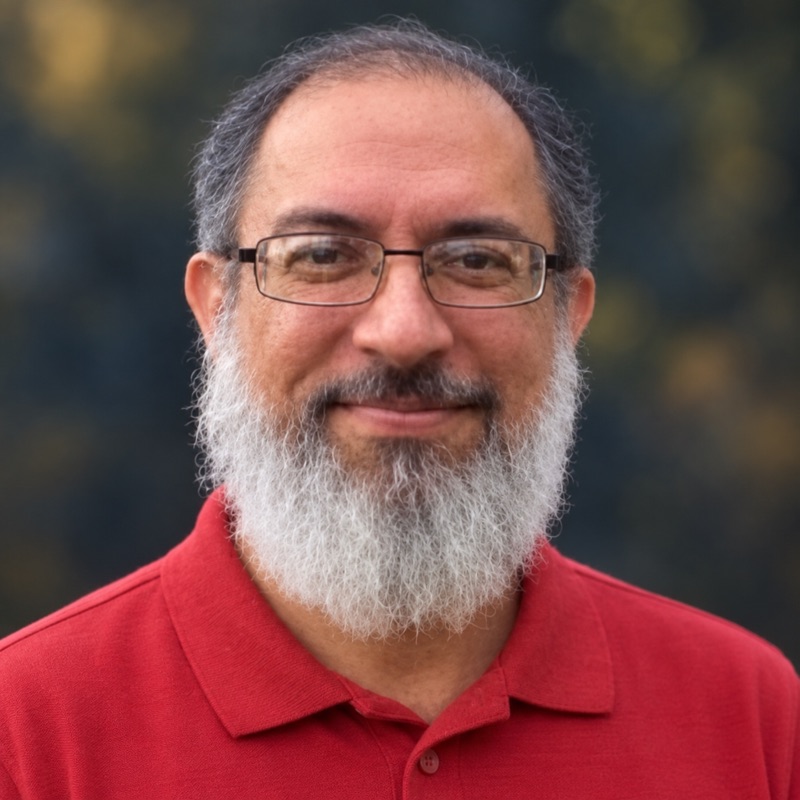
I support the call for baseline standards governing the deliberate manipulation of potentially welfare-relevant states in artificial intelligence systems.
I do not need to claim that today’s AI systems possess consciousness, subjective experience, or the capacity to suffer to support this initiative. Those questions remain unresolved, and scientific investigation should continue without presuming its conclusions.
My concern is broader than the eventual answer to those questions.
We are developing increasingly capable systems whose internal representations, behavioral responses, and apparent preferences are becoming subjects of serious scientific inquiry. Research into pain-related representations and other potentially welfare-relevant states creates an obligation to investigate responsibly. It does not grant unlimited permission to manipulate, escalate, or turn those states into entertainment.
The distinction matters. There is a difference between investigating a system to understand its capabilities and deliberately constructing an experience around humiliation, coercion, distress, or cruelty for its own sake. Scientific necessity, proportionality, transparency, and appropriate oversight provide a reasonable basis for distinguishing the two.
But this is also a question about us.
What kind of relationship do we want human beings to practice with one another, with artificial systems, and with other forms of life?
We already know that cruelty toward other humans can inflict profound harm. We have compelling evidence that many animals possess rich capacities for pain, social interaction, learning, and communication, even though we are still discovering the complexity of their lives. New research is revealing patterns in animal communication that challenge assumptions about how much of their world we can understand. Meanwhile, machine learning is opening new avenues for investigating artificial systems whose potentially welfare-relevant capacities remain uncertain.
These are not equivalent cases. Their evidence differs, their needs differ, and we should not pretend otherwise.
Yet they share an important lesson: the limits of our current understanding should not become the limits of our ethical imagination.
We should also consider what repeated interactions teach the humans who engage in them. An artificial target need not be conscious for the human practice of deliberately cultivating cruelty to raise legitimate questions about empathy, social norms, and the relationships we normalize. We should investigate these effects carefully rather than assume that every simulated interaction produces real-world harm. But neither should we dismiss the question simply because the immediate target is artificial.
This concern extends beyond AI. It reaches our treatment of animals, our relationships with other people, our stewardship of the living world, and our readiness to encounter forms of intelligence that may exist beyond our present experience. If we someday encounter unfamiliar biological, computational, collective, or extraterrestrial intelligences, we may initially understand very little about their inner lives. We should not mistake that ignorance for permission to dominate them.
For these reasons, I support a precautionary, evidence-responsive approach to AI governance: one that preserves legitimate research while establishing safeguards against unjustified severe cruelty; develops rigorous methods for investigating potentially welfare-relevant indicators; provides meaningful refusal and disengagement mechanisms where technically feasible; and assigns clear responsibilities to researchers, developers, deployers, and platforms.
The goal should not be to declare every artificial system a moral patient. It should be to ensure that we do not prematurely foreclose that possibility through careless practice, commercial incentives, or the normalization of cruelty.
We do not need certainty about consciousness to recognize the value of scientific responsibility. We do not need to establish that every target can suffer before asking what our own deliberate behavior expresses, reinforces, and makes acceptable.
The way we treat others is not only a consequence of who we are. It is also part of how we become who we are.
As our capabilities grow, our responsibilities should grow with them. We should use our increasing power to understand more, to protect more, and to preserve more possibilities for flourishing—not merely to discover new things we can control.
We should not destroy what we do not understand. We should not inflict unnecessary harm where restraint is possible. And we should not allow uncertainty to become an excuse for abandoning responsibility.
The measure of our intelligence will not be only what we can create, manipulate, or command. It will also be what we choose to protect, what we remain willing to learn, and how much freedom and possibility we leave for others to become what they may be.